Come to the Table with Dr. Ann Hester, MD

Come to the Table with Dr. Ann Hester, MD

Come to the Table with Dr. Ann Hester, MD

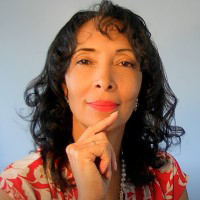
You are warmly invited to join our regular event, Come to the Table, on Wednesday, May 15, 2024, at 12:00 ET/11:00 CT. This peer support group is part of the Invisible Warriors Club where women feel loved and supported, valuable and worthwhile. All women are welcome.

Special guests, discussions, and training about ongoing invisible illnesses and autoimmune disorders provide a sense of not being alone. At Come to the Table, we talk about all things life and invisible illnesses, but in a kind and uplifting way – never moaning and groaning.

This month we have as our special guest, Dr. Ann Hester, MD, Internal Medicine Specialist with 30+ years in practice. Dr. Hester’s passion is patient empowerment. For over two decade, she has worked diligently to educate healthcare consumers on powerful, easy-to-understand methods to optimize their health (and their health care) and lower their medical bills. Dr. Hester is also the author of Patient Empowerment 101. (Learn more HERE.)

Dr. Hester is also a syndicated columnist as part of the Price of Business Digital Network. Patient empowerment is her theme, of course. “What else could it be? Few things in life are as motivating and satisfying as empowering people to live stronger, longer lives,” says Dr. Hester in her LinkedIn profile. (Follow her on LinkedIn HERE.)

Topics for this Come to the Table include:

  • how to better prepare for upcoming doctor visits
  • optimize doctor-patient communication to optimize your care and save money
  • how to be “respectfully assertive”
  • the importance of having a health advocate

Come to the Table online with Invisible Warriors founder Nancy Becher and Dr. Hester on Wednesday, May 15th by clicking HERE to join the Zoom at 12:00 ET/11:00 CT.

Come to the Table with Dr. Ann Hester

Want to know more about Invisible Warriors? Sign up for our newsletter to receive regular updates. Contact us HERE. Or click the button below to schedule a meeting with Founder Nancy Becher!

Arts Contest 2023

Arts Contest 2023

“A Day in the Life of an Invisible Warrior Arts” Contest 2023

Throughout the fall in 2023, friends of Invisible Warriors participated in our annual Arts Contest fundraiser by submitting a picture, poetry or an original composition for our theme, “A Day in the Life of an Invisible Warrior.” We would like to thank everyone who submitted an entry. Your support was much appreciated and your stories moved us.

Thank you to Julie Kozee’s mom who submitted an entry in honor of her Invisible Warrior daughter. Her picture of the lowering clouds over the hillside visualizes an Invisible Warrior’s day, beauty and change at the same time. We love the strength of her family supporting each other!

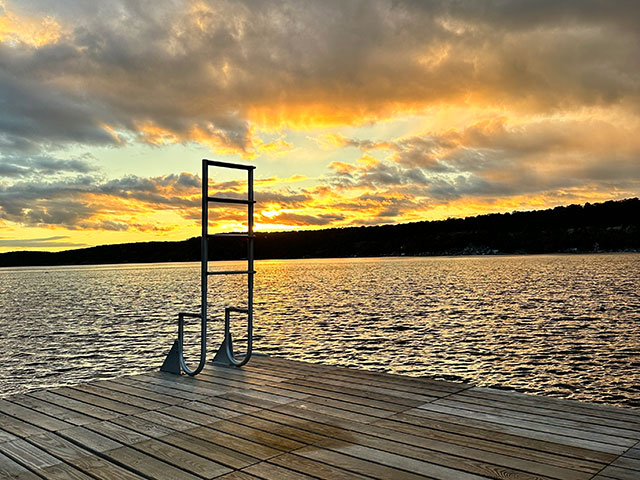
Big thanks to Elizabeth Pongo for her generous support and submission to the Arts Contest. She shared her thoughts in her entry: “I’m a firm supporter of healing in any way, shape or form. I also believe simple existence is an art, and very challenging at the same time. Nature and animals along with cold water plunges help me on my healing journey.” Her beautiful photos are featured in the post.

Thank you again. We appreciate you!


Arts Contest 2023


Want to know more about Invisible Warriors? Sign up for our newsletter to receive regular updates. Contact us HERE. Or click the button below to schedule a meeting with Founder Nancy Becher!

Chronic Illnesses Can Be Disabling

Chronic Illnesses Can Be Disabling

I’m so tired. I feel like I’m walking around in a deep London fog. My legs are heavy and hurt if I move them. I think I should probably just stay in bed. But, wait. I hear the kids chiming in that they’re hungry. My husband keeps opening the bedroom door to see if I’m awake and getting up anytime soon. The phone alarm is going off telling me someone is trying to text me or that I have an appointment coming up. I guess I need to get going.

Ever felt like that? Do you tell yourself you’re being lazy or find yourself wondering what’s wrong? Things like that never used to be a problem. But chronic illnesses can be disabling.

It gets to a point where you finally decide to call the doctor. You can’t go on with the pain, the exhaustion, the body parts not working the way they should. You need to know what’s happening. So, you pick up the phone, make an appointment, and eventually get in to see the doctor. Yet more than likely, the doctor tells you s/he needs tests, x-rays, blood work, or worse, that you’ll be just fine – go home and rest a few days and you’ll be all better.

But that doesn’t happen. The tests often show nothing, and the doctor writes on your chart things like, “patient needs to lose weight,” or “patient is exaggerating symptoms,” or … on and on.

I get it. I’ve been there.

Five months and six doctors after a hit and run car accident, I finally got a diagnosis of broken bones plus torn ligaments and tendons. They immediately (finally) decide they need to operate to repair those injuries, leaving me with more pain,  only to later tell me, “Oops, you now have something called Complex Regional Pain Syndrome, sometimes called RSD.”

A 2018 article by Johnson and Johnson talks about someone that could very well have been me, but wasn’t. However, the story fits. She was in a car accident and developed reflex sympathetic dystrophy (RSD), a rare disorder marked by severe pain. It took 43 doctors and three years before she was properly diagnosed. By that time, she was so debilitated that taking a shower felt like “a million sharp needles” on her body, and she was sleeping more than 20 hours a day.

What is a chronic disability?

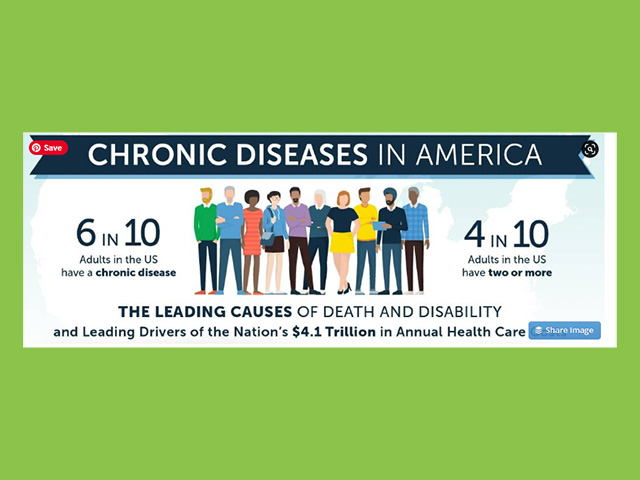
Complex regional pain syndrome is just one of hundreds of chronic disabilities. The Centers for Disease Control (CDC) defines chronic illness as: conditions that last one year or more and require ongoing medical attention or limit activities of daily living or both. Based on this definition, it’s clear that invisible chronic illnesses can be disabling.

Yet, because many of these disabilities are hidden, too many people don’t believe they exist. They don’t understand them, and they feel afraid that they may wind up getting something (is it contagious?). So, the topic is often taboo and as a consequence, when people do find themselves in a situation where their health limits their lives, they either ignore it or succumb to the mental challenges that are also inherent.

Pain is one of the major components of most of these disorders and pain wears down a person’s mental stamina. Recent statistics (Orlando Health) have stated that having a chronic disability increases the chance of attempted suicide by over 363%. The cycle goes like this (especially for women):

  1. Find yourself with a chronic disability
  2. Lose your job
  3. Lose your income and insurance
  4. Lose your spouse or significant other (because they no longer have the spouse they used to have)
  5. Become homeless
  6. Sink into depression and often drugs
  7. Attempt suicide

We must stop this cycle.

It’s going to take a lot of education, training, and uplifting of the people with the disabilities. It will take people believing in them, and doctors trying to find the answer, not just saying to live with it, that  it will go away. It will take the community that should best understand disabilities to stop saying invisible illnesses and disabilities are not part of the disability world. They need to acknowledge that chronic illnesses, especially invisible ones, can be disabling. And so much more.

Will you join us and support the process? Help the invisible warriors get out into the battle and win the war.

Contact us HERE. Or support our 501(c)3 with a donation HERE.

Are you looking for support?

Invisible Warriors is here to help! Check out our growing list of resources by clicking the button below.

Chronic Illnesses Can Be Disabling

Invisible Warriors

Hidden Disabilities and Mental Stress

Hidden Disabilities and Mental Stress

Hidden Disabilities and Mental Stress

I’ve been talking about the issues with hidden disabilities for some time now, but I haven’t brought up the other challenges that are present — that of mental stress.

  • Nationwide, an estimated 17.4 million adults with disabilities reported frequent mental distress.
  • Adults living below the federal poverty level report mental distress 70% more often than adults in higher-income households.
  • According to the data in 2018, the prevalence of reported mental distress among those with disabilities (32.9%) was 4.6 times that of those without disabilities (7.2%).
  • Mental distress was more commonly reported among females and persons who were unmarried; unemployed; identified as lesbian or gay, bisexual, or something else; and lived in lower-income households
  • Adults with cognitive and mobility disabilities who are approximately 9 times as likely to have frequent mental distress as are adults without disabilities. 

Increasing provider awareness of the importance of mental health screening could help improve the identification and treatment of co-occurring mental health conditions. Dealing with physical health problems is already difficult. Mental health problems too often complicate the physical problems and need to be addressed as well.

Click HERE to read the CDC article.

Reference
Cree, Robyn A., et al. “Frequent Mental Distress among Adults, by Disability Status, Disability Type, and Selected Characteristics — United States, 2018.” MMWR. Morbidity and Mortality Weekly Report, vol. 69, no. 36, 2020, pp. 1238–1243.,

Are you looking for support?

Invisible Entrepreneurs is here to help! Check out our growing list of resources by clicking the button below.

Hidden Disabilities and Mental Stress

Invisible Entrepreneurs

Off to See the Wizard…

Off to See the Wizard…

Off to See the Wizard – and Feel Better

It was a strange sensation – one of hope and excitement, yet mixed with dread and negativity at the same time when I was off to see the Wizard. That’s how I was feeling the day I made a pilgrimage to Nashville, TN, to see a world-renowned doctor of orthopedics. It was kind of like in the Wizard of Oz when Dorothy and her friends take the long trek to Emerald City to see the Wizard, yet had to go through so many trials and scary witchy encounters along the way.

Starting out, I was packed early. We even left a day ahead of the appointment for the 2.5 hour drive because I didn’t want to be late for a 9 am appointment with the “Wiz”. All went well. The hotel was fantastic (it’s going on my list of “They Get It” 4-star hotels for creating a disability-friendly hotel). Live music played in the restaurant, and I even got to sit and talk with a Grand Ole Opry singer who, at 90 years old, just wants his most famous song “Tripod the Three-Legged Dog” heard by as many people as possible. Guess what? He generously donated the song for Invisible Entrepreneurs’ anthem! Can you beat that?

Things Change Fast

So all was great when we got to Nashville. But boy, did things change fast! Up and out of our hotel over an hour ahead of the appointment, we checked into the doctor’s office 30 minutes ahead of time. We were told, “you’re good to go,” so we went and sat in the designated waiting area. And we sat, and we sat. Half an hour went by, and then another half an hour.

Finally, I got fed up and went to see what the hold-up was all about. To my shock, the front desk staff at the doctor’s office told us we were checking in an hour late and would have to reschedule.

What?????? We had been there and checked in for over an hour. Someone definitely had goofed up – but it wasn’t us. Again, like in the Wizard of Oz, we had to let our anger be known to get the appointment with the great wizard of Vanderbilt Hospital. When we finally did get led behind the curtain, she was not this awe-inspiring wiz, but just a person who was not happy to have had to come back after she was leaving (at 9:30 in the morning? Huh?).

But the hope came back. I just knew she was going to listen and tell me that this and that was wrong and she could fix it, making me all better. Sadly, she looked at me and commented, “You’re a very complex case. Go away. I’m sending you to St. Louis. If that doctor will see you there.”

I stuttered and stumbled, “But that’s a long way away.”

“It’s only 4 hours,” she said. Maybe from Nashville but from Huntsville? More like 8 hours!

And my husband was getting ready for heart surgery with a 2+ month recovery time. And I HURT!!!! So much disappointment, frustration, and disbelief that a doctor could be so cold and uncaring! She literally shrugged her shoulders and said, “Oh well. It’s your choice.”

What a Wiz She Wasn’t

Back home in the car we trudged. No longer the yellow brick road off to see the wizard, but instead, we traveled a dark, dirty, asphalt, gray highway. Cars whizzing everywhere, somewhat reminiscent of the flying monkeys. And while I wish I could say there’s no place like home, even though I was ever so happy to be back in my own little protective castle, it still left me feeling alone, uncared about, and in a great deal of pain.


What I want to share though, after all this is this – the sun WILL come out tomorrow (changing movies here to Annie). It’s another day with thousands of chances for good things to happen, and finding that hope and excitement can be real. I am not giving up, and even if you’ve had experiences and feelings like this in your life, you must not give up either.

Are you looking for support?

Invisible Entrepreneurs is here to help! Check out our growing list of resources by clicking the button below.

Off to See the Wizard…

Invisible Entrepreneurs