We’re Not Your Grandfather’s Veterans Organization

We’re Not Your Grandfather’s Veterans Organization

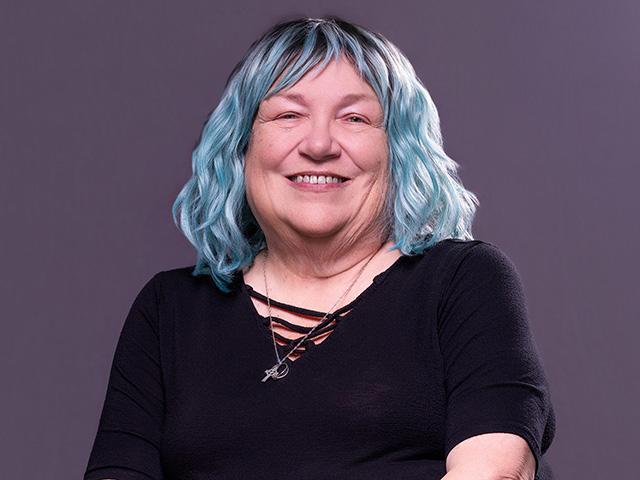
By Nancy Becher, Founder & Executive Director, Invisible Warriors

There’s a conversation happening inside the largest veterans organizations in America right now. You won’t hear it in their press releases. You’ll hear it from the post commanders — the people close enough to the problem to speak plainly about it.

One of them put it this way: “If we don’t bring in the younger generation, if we don’t have these people, then the American Legion doesn’t survive.”

He’s right. And the national leadership mostly responds with careful language about external factors (smaller military, aging membership, demographics) rather than asking the harder question: Why haven’t we given the next generation of veterans a reason to show up?

I’m not writing this to pile on organizations that have done real and important work. I’m writing this because Invisible Warriors was built in the space that answer creates.

The Gap No One Wants to Name

The VFW and American Legion were built for a specific era of veteran. The World War II veteran who came home, joined the post down the street, and found community around shared service. That model worked because the world it was built for was cohesive: same war, same generation, same cultural moment.

The post-9/11 veteran exists in a different world entirely.

Less than 1% of Americans serve. That means most veterans come home to communities where almost no one around them has shared that experience. The isolation isn’t a feeling: it’s a structural reality. And an organization built around a physical post in a town where veterans already knew each other doesn’t solve that problem. It replicates it at a smaller scale.

What the data shows — membership in free fall, posts consolidating or closing, the oldest members holding the whole thing together — isn’t a surprise. It’s the outcome of applying a 20th-century model to a 21st-century reality and calling the gap a “challenge.”

"It's the outcome of applying a 20th-century model to a 21st-century reality and calling the gap a 'challenge.'"

What We’re Building Instead to Support Women Veterans

Invisible Warriors isn’t a post. We’re not a membership drive. We’re not asking veterans to show up to a building on Thursday nights and hope that community happens.

We’re building something different: a connection that meets veterans where they are.

That means online and in-person. It means programs designed around the specific experience of women veterans: a population that the legacy organizations have historically underserved, underrepresented, and in some cases actively excluded. It means acknowledging that the barriers veterans face aren’t just about benefits and bureaucracy. They’re about belonging. About being seen. About finding people who understand what you carry without having to explain it first.

The name says it. Invisible Warriors. We exist because there is a population of veterans who are disproportionately women, disproportionately from recent conflicts — and who have been doing hard, real, consequential things in service to this country, and coming home to find that the systems built to support veterans weren’t quite built for them.

We’re not trying to replace what the legacy organizations do well. We’re filling the space they left.

Honest About What This Takes

The veterans who need what we’re building aren’t going to be reached by comfortable language.

They’re not going to show up because we sent a press release. They’re going to show up because someone they trust told them: this is real, these people see you, this is worth your time.

That’s a harder thing to build than a membership drive. It requires trust, and trust takes time. It requires showing up consistently, following through, making people feel that when they reach out, someone is actually on the other side.

It also requires honesty about what we are and what we’re still becoming. We’re a young organization. We’re growing. We don’t have the infrastructure of organizations that have been doing this for a hundred years. What we have is clarity of purpose and a genuine commitment to building something that works for the veterans who are actually here — not the ones who existed in 1945.

"The warriors who've been invisible long enough deserve to be seen. That's what we're here for."

Why This Moment Matters

The veterans who served in Iraq and Afghanistan are aging into the years when the need for community and connection becomes most acute. The window to reach them — before the isolation compounds, before the distance from service becomes too great, before the assumption sets in that there’s nothing out there for them — is not infinite.

The organizations that could have served them have, in many cases, failed to adapt quickly enough. That’s not a condemnation. It’s an observation. And it creates an opening.

Invisible Warriors exists in that opening. We intend to use it.

If you’re a veteran looking for something that doesn’t feel like it was designed for someone else’s experience — we’re here.

If you’re someone who cares about veterans and wants to support women veterans through an organization that’s doing this work honestly and from the ground up, we’d love to have you.

The warriors who’ve been invisible long enough deserve to be seen. That’s what we’re here for.


Nancy Becher is the Founder and Executive Director of Invisible Warriors, a nonprofit dedicated to building community and connection for veterans (especially those who have felt unseen by traditional support systems). Learn more at invisiblewarriors.org.

Want to know more about Invisible Warriors? Sign up for our newsletter to receive regular updates. Contact us HERE.
Or click the button below to schedule a meeting with Founder Nancy Becher!
We’re Not Your Grandfather’s Veterans Organization

Women Veterans: Memorial Day

Women Veterans: Memorial Day

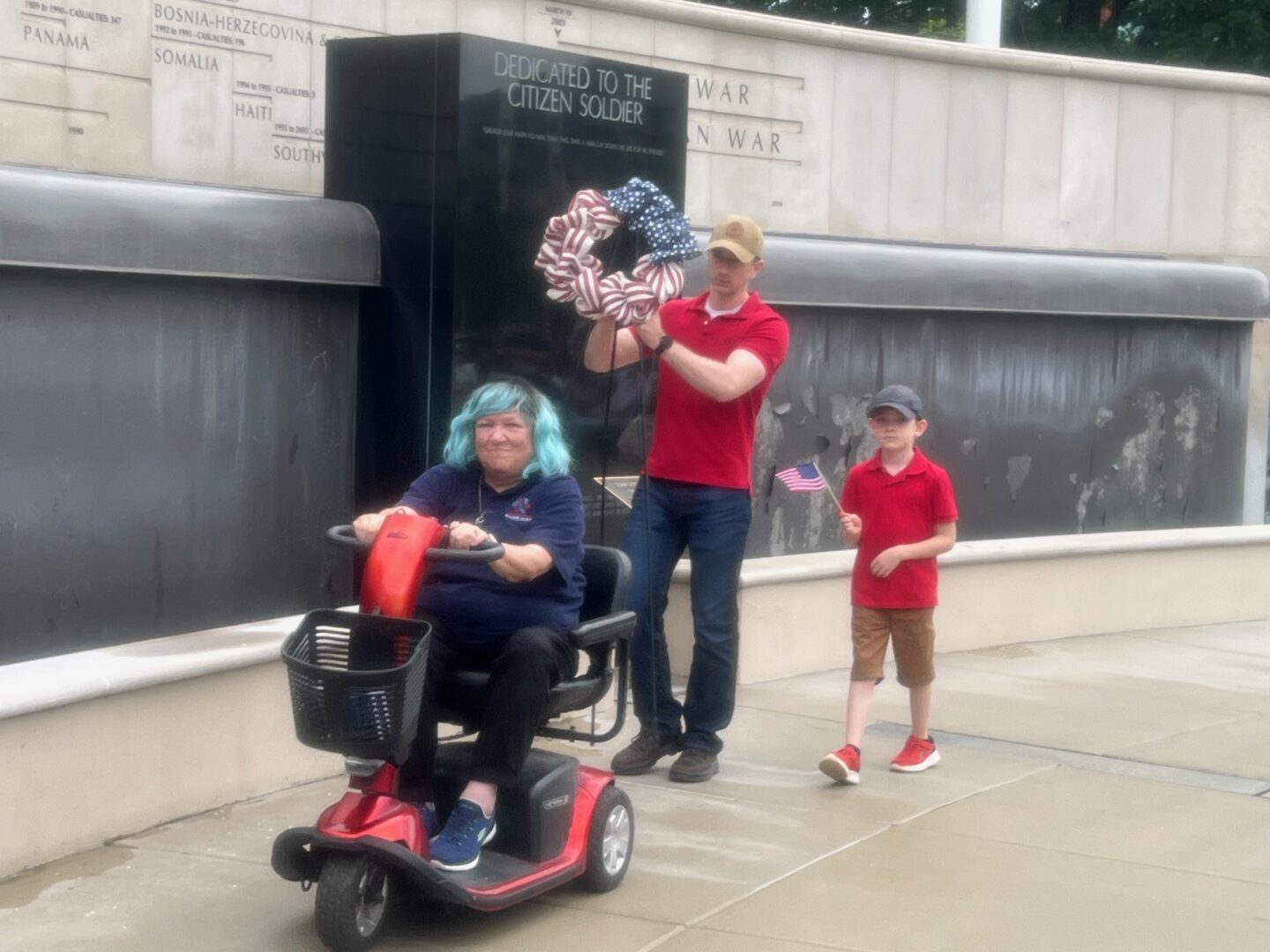
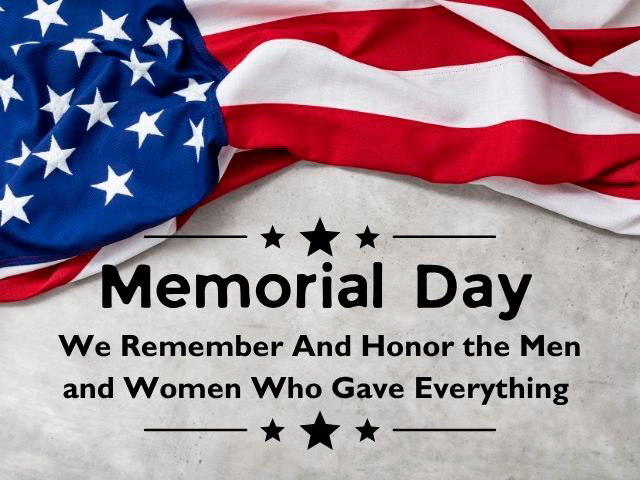
This Memorial Day, let’s talk about the women who gave everything.

On Memorial Day, we line the streets.
We hang the flags.
We say the words.

“Thank you for your service.”

And we mean it. At least, we think we do.

But here’s what we’re not saying.

Women veterans have served in every war this country has fought. From the Revolutionary War to Iraq and Afghanistan. You bled on the same ground. You carried the same weight. You came home — and this country didn’t know what to do with you.

On the one day we set aside to honor the fallen and the brave — most people don’t even picture a woman. That is not accidental. That is a pattern.

The image of a veteran in this country is male. It has always been male. The VA was built for men. The statues are mostly men. The stories we tell are mostly men.

You raised your hand anyway.

You signed on the dotted line. You said you would give your life for this country. You meant it. You did it.

Some of you didn’t come home.

And those of you who did? You came home to employers who didn’t recognize your service. Communities that looked right past you. A system that was never built to hold you.

We see you.

Invisible Warriors is built by women, for women, with the understanding that belonging is not soft. It is everything. We believe that peer connection — women helping women — is one of the most powerful forces in the world. Not a program. Not a checklist. A community that knows your name before you finish your sentence.

You don’t need saving. You need what you earned.

Respect. Honor. A seat at the table that’s been at the head of this country’s defense since the beginning.

Memorial Day is not just for the men. It never was.

So this year, when you hang your flag and say your words — look a little further. Learn a name you don’t know. Support an organization fighting for women who served. Write a check. Show up.

Because “thanks for your service” is the beginning. Not the end.

It’s time we showed our gratitude with something deeper than words.

Visit us at invisiblewarriors.org

Because you don’t have to do it alone — we are here with you.

Want to know more about Invisible Warriors? Sign up for our newsletter to receive regular updates. Contact us HERE.
Or click the button below to schedule a meeting with Founder Nancy Becher!
Women Veterans: Memorial Day

Women Who Shape the State 2026

Women Who Shape the State 2026

Women Who Shape the State 2026

Alabama’s future is brighter because of the women who pour their talent, determination and hearts into building it. Brick by brick, literally and figuratively, they strengthen our communities and create lasting change across the state.

Like the trailblazers who came before them, the 2026 Women Who Shape the State class represents a diverse group of educators, innovators, healthcare champions, business leaders, nonprofit founders and community advocates — all united by a shared commitment of creating a better Alabama.

Whether improving access to vital services, championing young people, supporting families, founding groundbreaking businesses or enriching Alabama’s cultural landscape, each woman has made a lasting mark on the people and communities they serve. And it shows — as it was their own communities who nominated them for this honor after witnessing firsthand the progress they’ve made in helping to drive our state forward.

This is Alabama will celebrate these remarkable leaders at the Women Who Shape the State luncheon, presented by Inline Lighting, on Thursday, March 5, 2026, at The Club in Birmingham.

This year’s keynote speaker is Lulu Gribbin high school student, shark attack survivor, adaptive athlete and youth advocate — whose bravery and determination has inspired people across the state and around the globe. AL.com’s Ivana Hrynkiw will serve as host for the event.

Join us as we celebrate the women shaping Alabama’s future.

Credit: This is Alabama post

WHNT Channel 19 Interview

Why does Invisible Warriors exist? “Nancy often accompanied her husband, Ed Becher, a retired Marine Corps Master Sergeant, to his VA appointments and American Legion meetings. She said it was there that she learned of the unique challenges women veterans face, despite never serving herself.” From an interview on WHNT Channel 19 in Huntsville featuring her before the awards ceremony. You can view the article and video of the interview HERE.

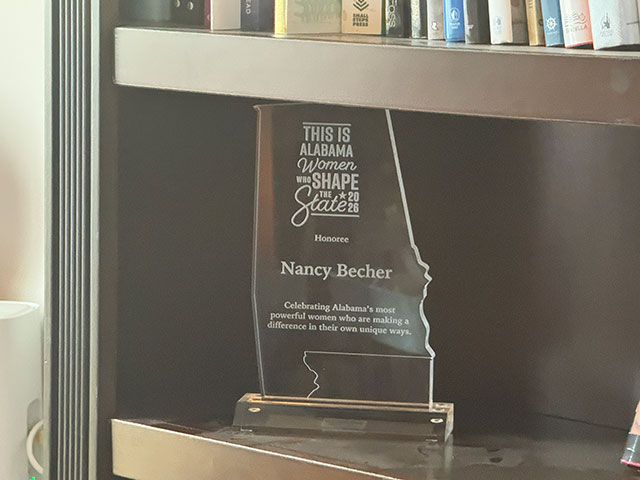
Nancy-women-who-shape-Alabama-Award

Nancy’s Experience

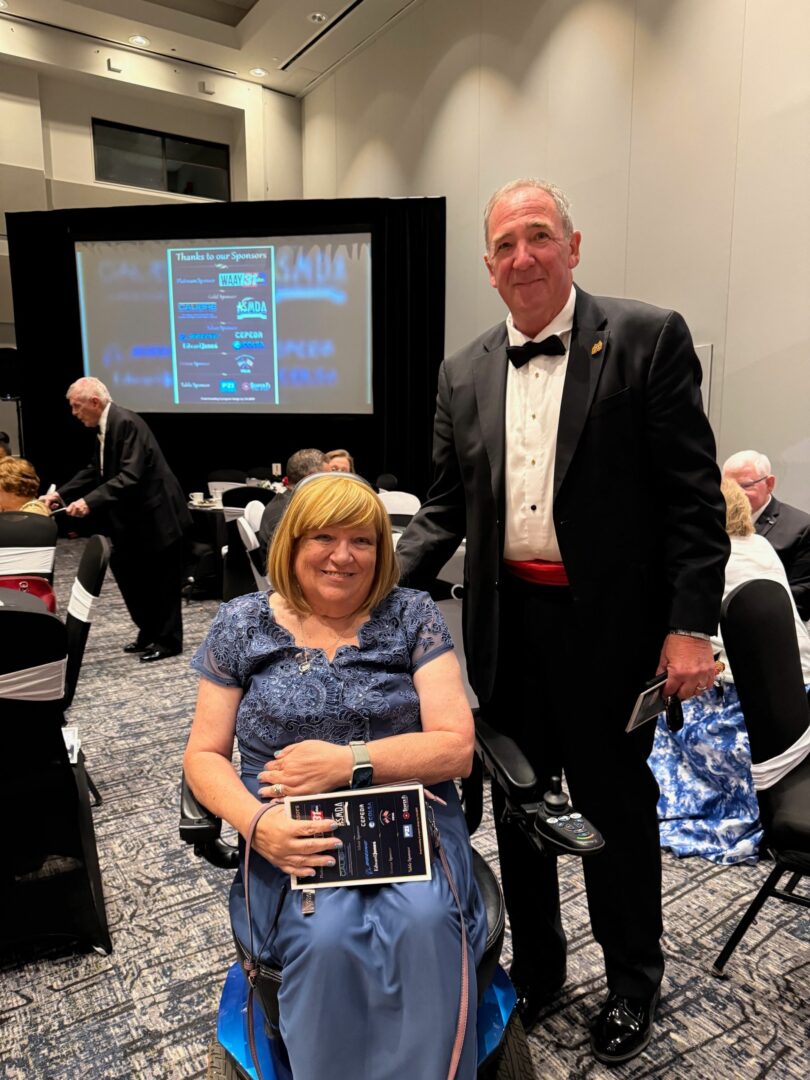
Several months ago, I received a notification that I had been nominated for one of the 25 women who shaped the state of Alabama in 2026. Ed and I went down to Birmingham on Wednesday, March 4, to stay overnight so we could arrive on time the next day for the event because we live 2 1/2 hours away.

When we walked into the room on Thursday, we were greeted by about 150 men and women. The first part of the day was a networking event where we all talked and introduced ourselves. We enjoyed hors d’oeuveres and champagne while we got acquainted.

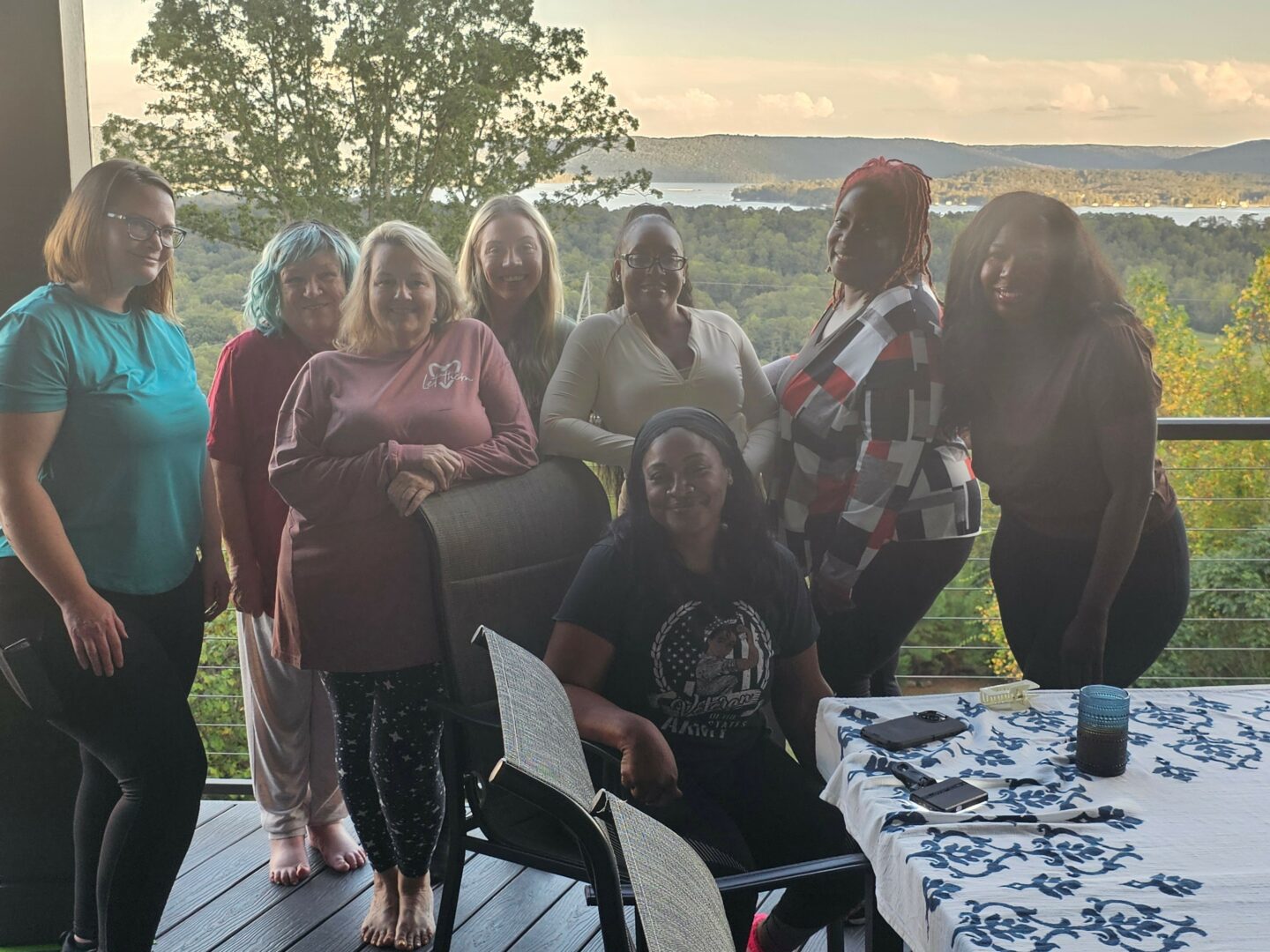
Then we all went out and had our picture taken as a group. After the picture, we sat at tables in a different room to enjoy a nice lunch.

Each woman being honored had previously had a video created about her and her accomplishments that also told about their organization. There were teachers, nonprofits, government officials, corporation managers – it was a very diverse group of women. As each video was shown, the woman being honored went up to the front to receive her award.

It was an awesome time with all of us becoming friends with each other, congratulating each other, talking about and celebrating each other’s efforts, and remarking on how much the State of Alabama needed each one of us. It was an incredible experience!

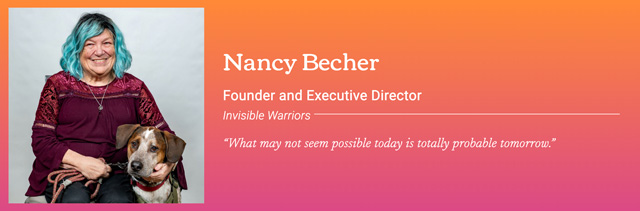
Nancy Becher State Honoree image

Nancy Becher is the Founder and Executive Director of Invisible Warriors, where her work is rooted in impact, service, and hope. Her proudest achievement is establishing the Huntsville Military Women’s Community Center, including flagship programs such as the Recharge, Reconnect, Remember Retreats and the Come to the Table Resource Workshops. To date, these programs have served more than 300 women, including participants who have moved from crisis to connection—one woman from the first retreat had previously been flagged for suicide by the VA and now finds hope and community through the program.

Guided by the belief to “allow yourself to feel the lows, then reorient toward positivity,” she draws inspiration from those who choose courage over despair. Becher hopes her legacy is one of empowering women veterans and other women to lead with courage, value their voices, and access the opportunities they deserve—building sustainable programs, strong communities, and lasting impact that honors the contributions of women who served.

Nancy will be highlighted on the This is Alabama Facebook page HERE on Tuesday, February 24, 2026 with PeggyLee Wright. Congratulations, Nancy!

Women Who Shape the State 2026

Invisible Warriors

Want to know more about Invisible Warriors? Sign up for our newsletter to receive regular updates. Contact us HERE.
Or click the button below to schedule a meeting with Founder Nancy Becher!
I Didn’t Know This Was Trauma Until Years Later

I Didn’t Know This Was Trauma Until Years Later

I Didn’t Know This Was Trauma Until Years Later – Amanda’s Story


I was in Turkey for Operation Northern Watch. We were told plainly: not everyone wants us there. Watch your back, especially off base.

At the time, I thought I understood where my trauma came from. I knew the sexual assault I experienced there left deep marks, and it did. I never questioned that.

What I didn’t recognize, what I brushed aside for years, was how much being in a hazard duty zone shaped me, too.

I was the only consistent medical person deployed with my squadron. We had two flight surgeons assigned to our air wing, but each was only there for about two weeks. Over the course of the deployment, I had a flight surgeon for a total of four weeks, while other squadrons deploying to Turkey and Saudi Arabia had a flight surgeon with them for the entire time.

That meant continuity fell to me. The responsibility didn’t rotate. If something happened, I was the one who knew the people, the patterns, the histories. I was the one always there.

It wasn’t a declared combat zone. There were no daily firefights, no clear front lines. So I minimized it. I told myself it “didn’t count.” Compared to others, I thought I had no right to name it.

But living with constant warnings, constant vigilance, and the unspoken understanding that danger was always possible rewired something in me. The scanning. The tension. They are never fully relaxing. The way my body learned to stay alert, even when my mind tried to move on.

Years later, I realized my hypervigilance didn’t come from one moment alone. It came from existing in a place where safety was conditional, danger was unspoken but understood, and responsibility never truly turned off.

I didn’t know then that this, too, was trauma.

That delayed understanding is one of the reasons I am part of Invisible Warriors. I believe deeply in the mission of Invisible Warriors. Too many military women and women veterans carry experiences they minimize, dismiss, or don’t recognize as trauma until years later.

Invisible Warriors exists to name those experiences, to create space where women can unpack what followed them home, and to remind us that trauma doesn’t have to be visible, extreme, or immediate to be real.

I didn’t know this was trauma until years later.

No woman should have to wait that long to understand what shaped her or to know she’s not alone.

I Didn’t Know This Was Trauma Until Years Later

Invisible Warriors

Want to know more about Invisible Warriors? Sign up for our newsletter to receive regular updates. Contact us HERE.
Or click the button below to schedule a meeting with Founder Nancy Becher!
Story & Lesson Highlights with Nancy Becher of Huntsville

Story & Lesson Highlights with Nancy Becher of Huntsville

Story & Lesson Highlights with Nancy Becher of Huntsville

For many attendees, the toll of military life lingers as Post-Traumatic Stress (PTS) and Military Sexual Trauma (MST). The Department of Veterans Affairs notes that MST affects nearly 1 in 3 women veterans, and that women are twice as likely as men to develop PTS. Numbers like these aren’t abstract; they’re people, strong, brave people who deserve community, care, and a real shot at healing.

What I found most powerful about this weekend wasn’t the activities (though they were meaningful): it was the quiet moments when someone spoke honestly about her darkest days, and the group responded with listening, affirmation, and practical steps forward. As an Invisible Warriors spokesperson put it, “Isolation makes trauma worse. These retreats remind women veterans that they are not alone, that healing happens in community.”

A few moments that stayed with me:

One veteran, who had been red-flagged for suicide attempts five times, shared that she no longer feels the urge to harm herself. “Now I know there are others who care, who will show up if I call. I’m not alone anymore,” she said—tears and hope in the same breath.

Another attendee found the courage to pursue stability by filing for disability benefits. With peer encouragement, she completed her intent-to-file paperwork before the weekend ended, taking a concrete step toward the support she earned through service.

Can you briefly introduce yourself and share what makes you or your brand unique?
Drawing from her own experiences and educational background—including a Master’s in Counseling and a Ph.D. (ABD) in Sociology from Western Michigan University—Nancy works with women veterans and others facing invisible disabilities like PTSD and MST. As an International #1 bestselling author, certified Peer Support Specialist, and Chaplain, she founded Invisible Warriors to provide resources, training, and support that help military women recognize their worth and potential. Nancy continues to expand her skills as a Mental Health Coach, staying committed to breaking cycles of loss and empowering others through her work. You can reach her at Nancy@InvisibleWarriors.org.

Okay, so here’s a deep one: What’s a moment that really shaped how you see the world?
Watching the vast number of women veterans who have given so much of themselves and their lives to support our country, yet seeing them dismissed, undervalued, and treated as less worthy than their male counterparts—that fundamentally changed how I see the world. These women served with the same dedication and sacrifice, but their struggles, especially with invisible wounds like PTS and MST, are often overlooked or minimized. Witnessing that disparity opened my eyes to how much work needs to be done to ensure women veterans receive the recognition, support, and care they’ve earned. It’s what drives everything I do with Invisible Warriors—making sure these women know they matter and that their service counts just as much as anyone else’s.

Was there ever a time you almost gave up?
Almost daily, honestly. Fighting against the unjust actions around us, the lack of support from society, and even from those who should care most about these women—it wears on you. There are moments when it feels like you’re pushing against an impossible weight. But then something happens that reminds me God is watching. A breakthrough, a connection, someone’s life changing—these moments show me there’s still hope, still support, and that the world is still fundamentally a good place. Those reminders keep me going, even on the hardest days.

Sure, so let’s go deeper into your values and how you think. Is the public version of you the real you?
Absolutely. What you see is what you get. I don’t have the energy to pretend to be someone I’m not—this work is too important and too personal for that. My passion for supporting women veterans comes directly from my own experiences and what I’ve witnessed. The struggles, the frustrations, even the moments of doubt I share publicly—they’re all real. I believe authenticity is essential in this work because the women I serve need to know I truly understand, that I’ve been in the trenches too. So yes, the public Nancy is the real Nancy—flawed, determined, and completely committed to this mission.

Okay, so before we go, let’s tackle one more area. Are you doing what you were born to do—or what you were told to do?
I’m doing what I was born to do. This wasn’t the path anyone laid out for me or told me to follow—it found me through my own experiences and the injustices I couldn’t ignore. When you witness women who’ve sacrificed so much being dismissed and undervalued, you can’t just look away. This work chose me as much as I chose it. Everything in my life—my education, my struggles, my faith—has led me here. Supporting women veterans and those with invisible disabilities isn’t just a job or a calling someone handed me; it’s woven into who I am. I finally feel like I’m exactly where I’m supposed to be, doing exactly what I’m meant to do.

Contact Info:

Story & Lesson Highlights with Nancy Becher of Huntsville

Invisible Warriors

Want to know more about Invisible Warriors? Sign up for our newsletter to receive regular updates.

Contact us HERE. Or click the button below to schedule a meeting with Founder Nancy Becher!